
Not Just a List of Records
Unlike the automotive industry, a boat's story doesn't live in one database. Marine Passport connects vessel identity and historical records with reported damage and loss history, factory specifications, machinery intelligence, maintenance guidance, safety information, technical resources, and buyer-focused research — helping turn fragmented marine information into a clearer and more comprehensive picture of the vessel.
Vessel Lookup
Vessel Identity, Registration & Documentation
What exactly is this boat?
Marine Passport starts with the HIN, then looks across available records and research to establish the vessel's identity — including its manufacturer, model, year, build details, vessel names, and other identifying information. Differences between available records are surfaced rather than silently recorded.
How has this vessel been officially identified and documented?
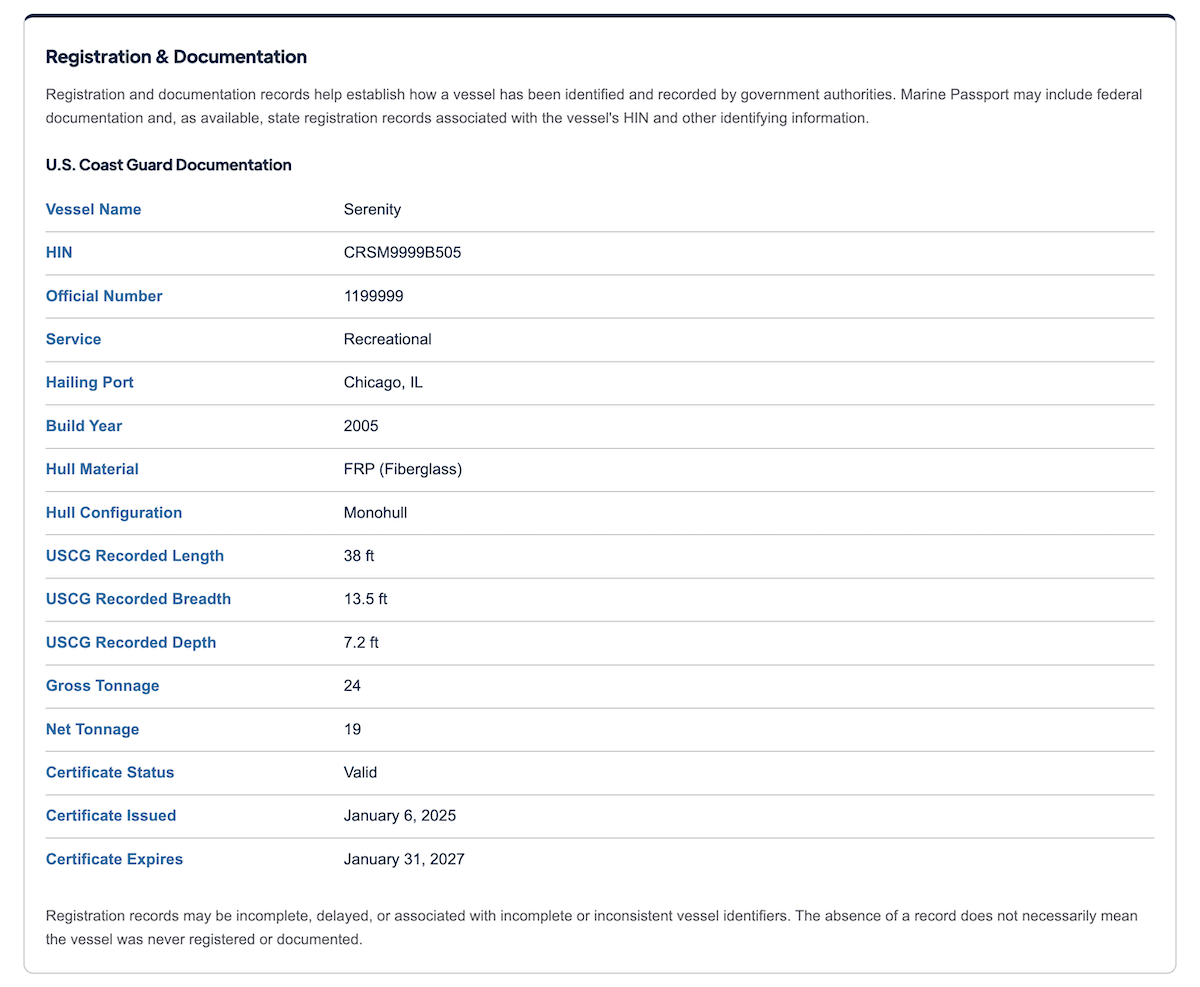
Registration and documentation records can add official numbers, vessel names, hailing ports, recorded dimensions, documentation status, and other identifying details. Marine Passport connects available federal and state records to the vessel's HIN to build a clearer picture of how the vessel has been recorded by government authorities.
Documentation History
How has this vessel been recorded over time?
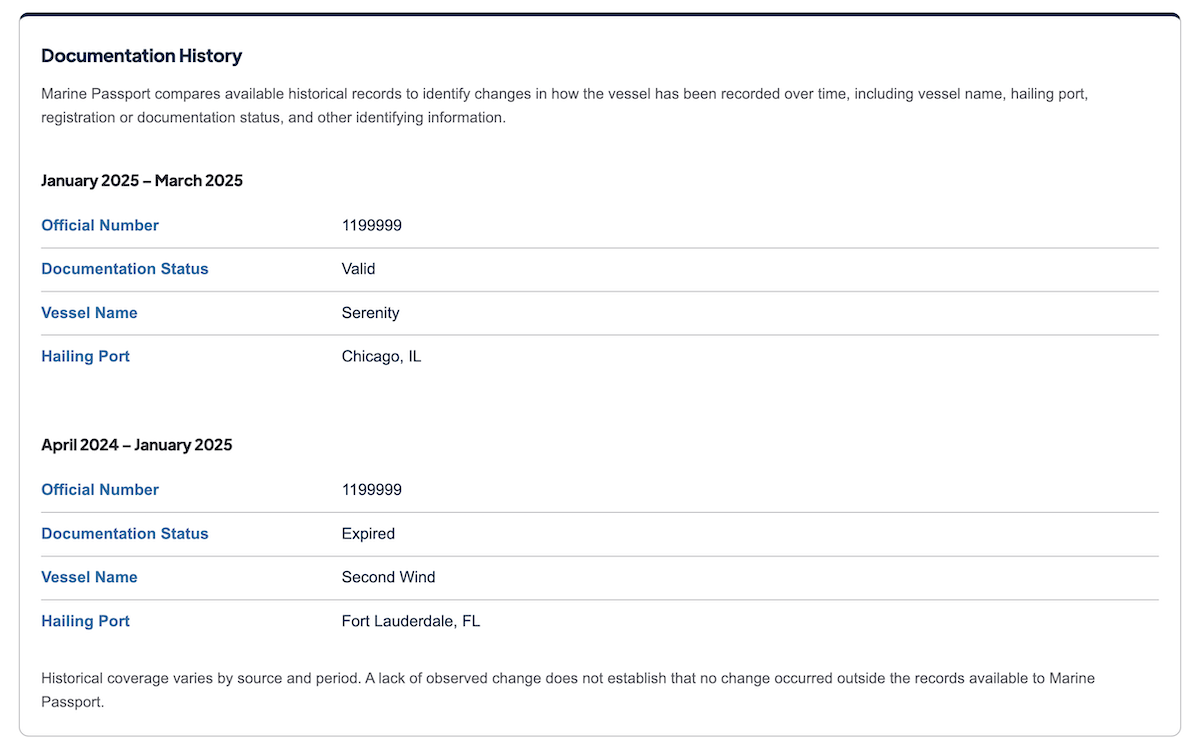
A boat can accumulate different names, hailing ports, registration or documentation statuses, and other recorded details throughout its life. Marine Passport compares available historical observations tied to the same hull to surface those changes over time.
What can those changes tell me about the vessel's history?
Changes across historical records can reveal continuity, transitions, and inconsistencies that a current record alone may not show. Marine Passport organizes those observations chronologically so buyers can see how the vessel has appeared in available records across different periods.
Damage, Loss & Accidents
Are there reported accidents, damage, or losses in this boat's history?
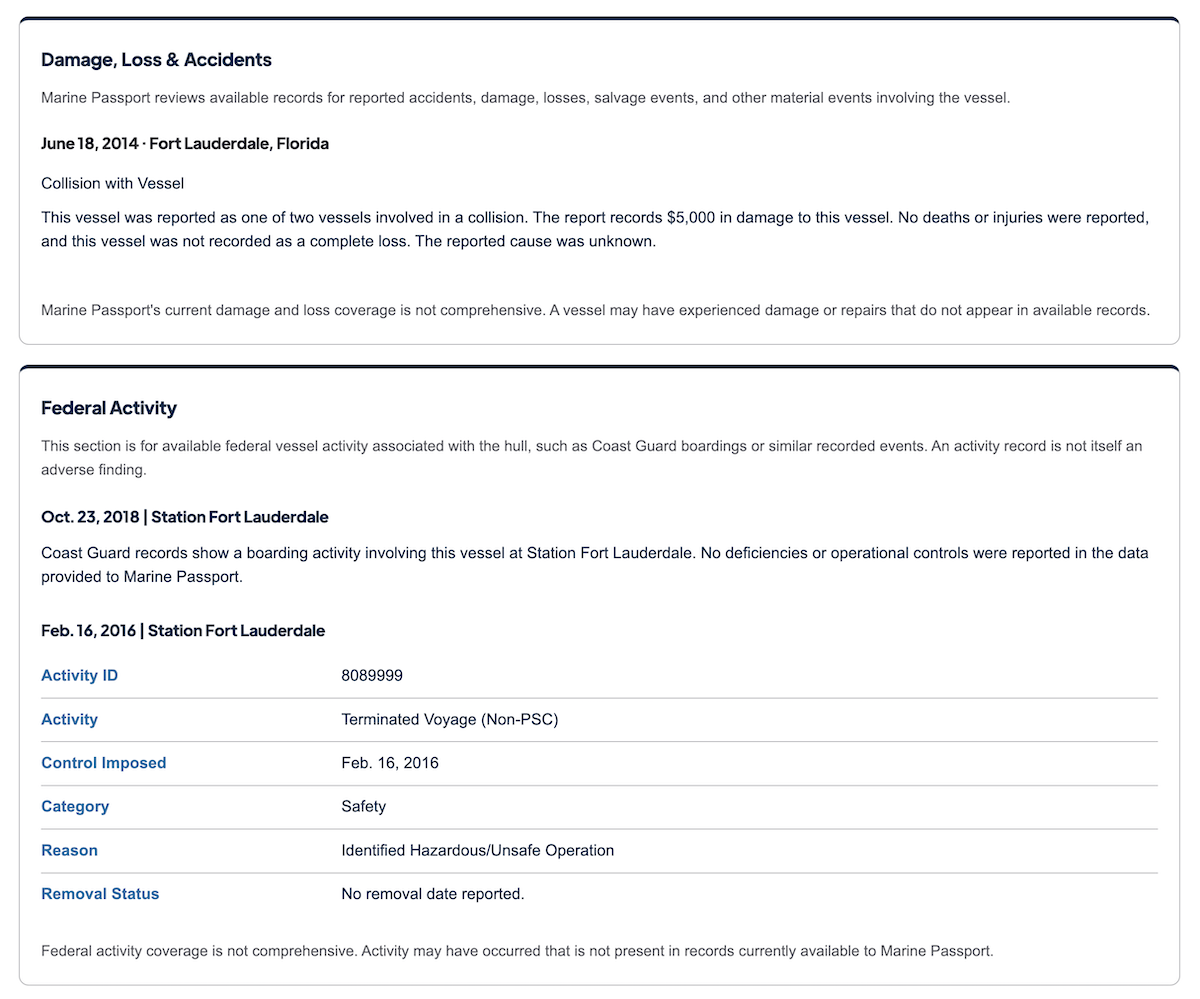
Marine Passport searches available records for reported accidents, damage, losses, salvage events, and other material events involving the vessel. When information is identified, Marine Passport connects the reported event to the vessel and presents the available details in context.
What do the available records tell me about what happened?
Depending on the record, Marine Passport may identify when and where an event occurred, the type and sequence of events, reported damage, complete-loss status, casualties, reported cause, and other material circumstances. Findings are presented with the available context while avoiding assumptions about fault or facts the records do not establish.
Specifications & Factory Power
How was this model built and equipped?
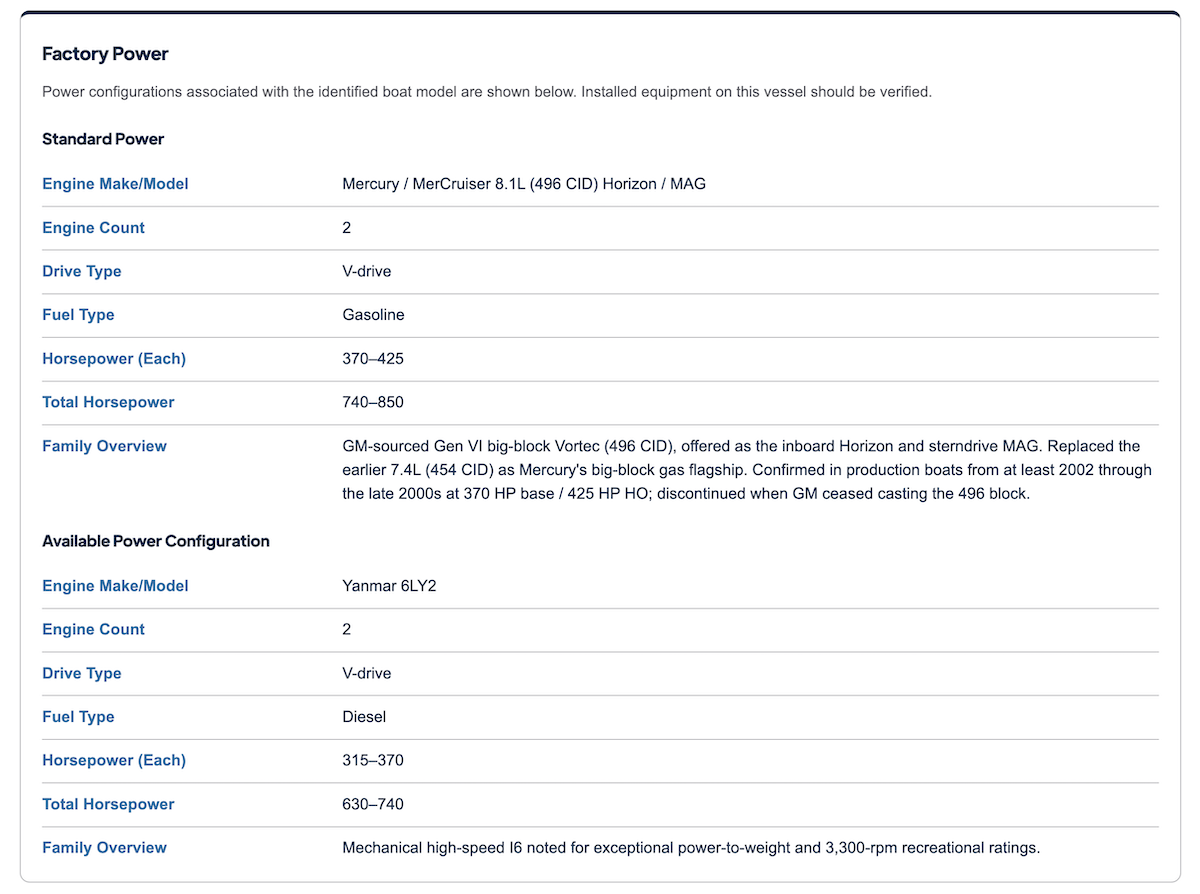
Marine Passport researches available factory information to establish how the model was originally designed and equipped — including dimensions, construction, capacities, standard equipment, available options, and other model-specific characteristics.
How was this model originally powered?
Factory power can vary by model year, configuration, and market. Marine Passport researches available engine and drive configurations, including engine make and model, horsepower, drive type, and engine-family details, to show the power packages originally offered for the model.
Service, Maintenance, Safety & Recalls
What should have been serviced or inspected by now?
Marine Passport looks at available manufacturer guidance for the model and its machinery to highlight service and inspection requirements that may apply by age, operating hours, or maintenance interval. The goal is to help identify what should be verified in the vessel's service history or during a pre-purchase inspection.
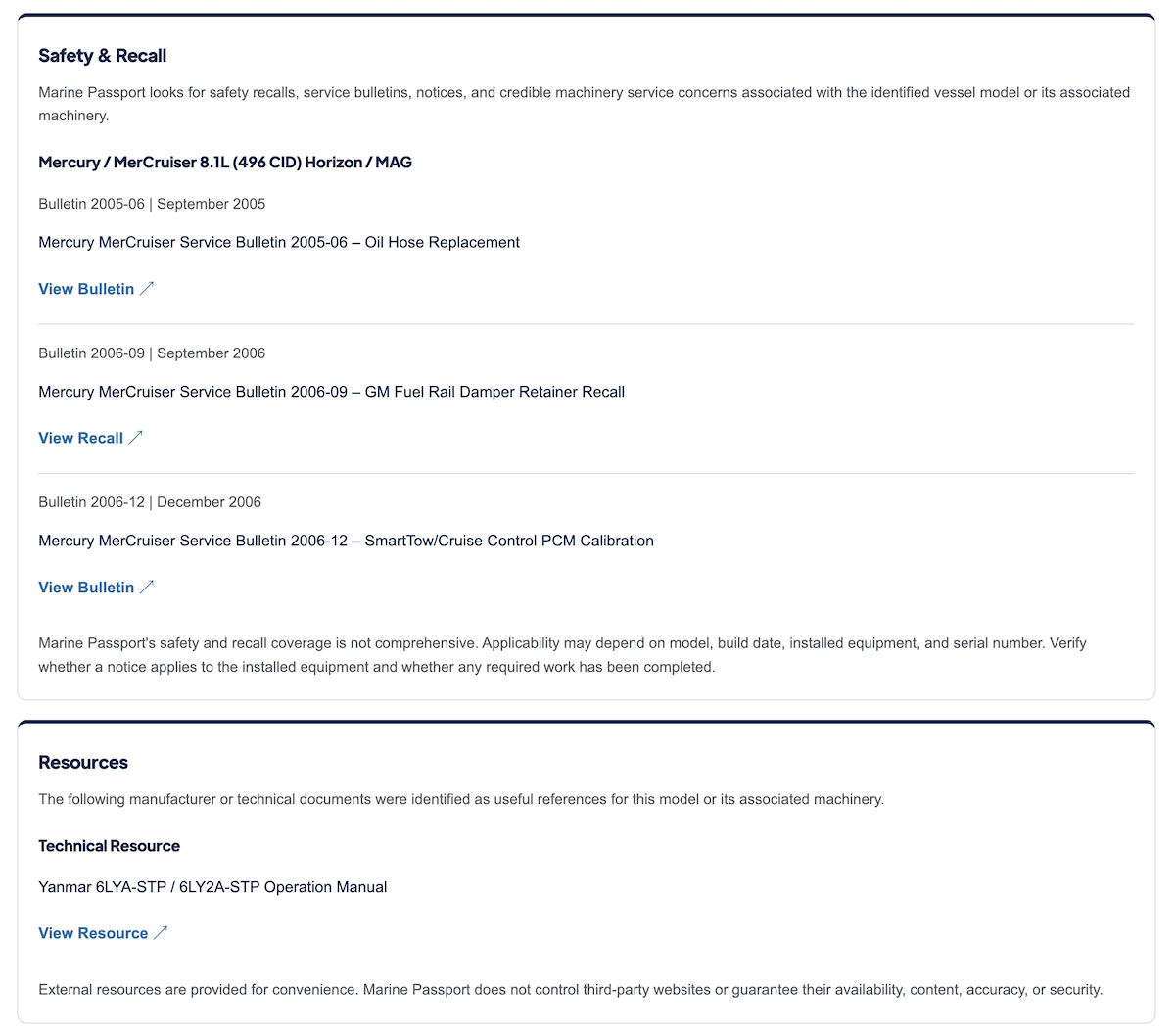
Are there known issues I should investigate?
Marine Passport digs into recalls, service bulletins, safety campaigns, and known machinery issues associated with the model and its equipment — surfacing problems, patterns, and manufacturer guidance a buyer should know before taking ownership.
Resources & Buyer Considerations
What information exists to help understand, operate, and maintain this boat?
Marine Passport looks beyond historical records to find useful technical information for the model and its equipment. Manuals, brochures, specification sheets, parts information, service literature, and other authoritative resources help turn the Passport into something you can continue using after the purchase.
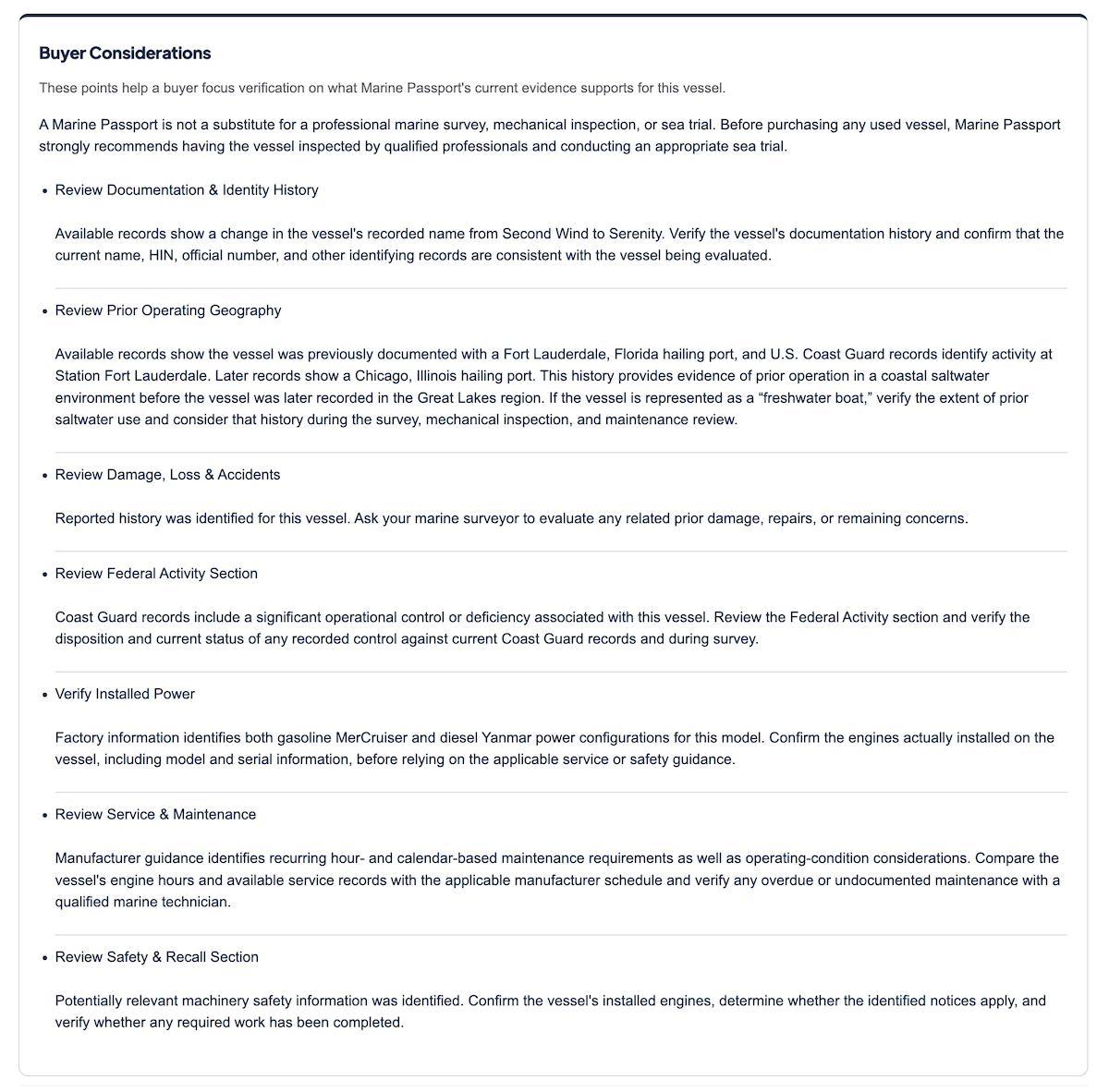
What deserves closer attention?
Marine Passport brings the findings together to surface what deserves a closer look — from gaps and inconsistencies to maintenance concerns, installed equipment, prior operating history, and known issues. It turns the research into practical questions, priorities for inspection, and considerations to carry into the purchase decision.
Ready to Get Started?
Select your search method to learn more about any US recreational vessel.
